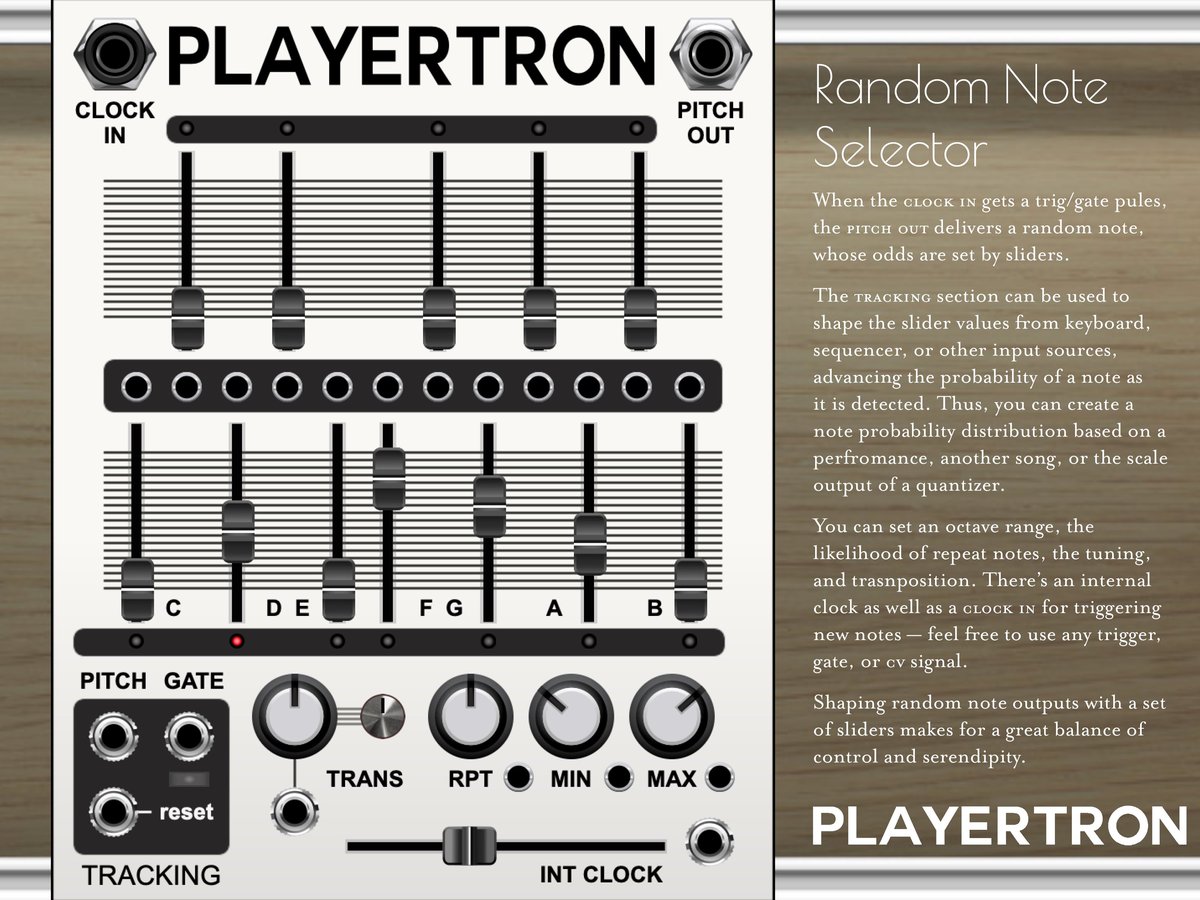
Beyond the Blank Staff: Unlocking Creativity with Random Note Generators
Ever found yourself staring at a blank sheet of music, fingers hovering over your instrument, or eyes glazed over a digital audio workstation, utterly devoid of inspiration? The good news is, you're not alone. Many musicians, composers, and students hit creative walls. This is where the fascinating world of Types of Random Note Generators & Their Outputs comes into play, offering a unique blend of structured randomness to spark new ideas, sharpen skills, and even challenge conventional musical norms. These aren't just quirky toys; they're powerful tools designed to nudge you out of predictable patterns and into uncharted sonic territory.
At a Glance: Your Guide to Random Note Generators
- What they are: Digital tools that use algorithms to produce musical elements (notes, rhythms, melodies, chords) without human bias.
- Core Purpose: Primarily for breaking creative blocks, enhancing practice routines, and exploring new musical ideas.
- Key Outputs: Can range from single notes for sight-reading to complex MIDI sequences for full compositions.
- Main Types: Generally categorized by their focus—skill-building, compositional aid, or experimental sound design.
- Benefits: Improves technique, expands theoretical understanding, fosters adaptability, and injects fresh perspectives into your music.
Why Embrace the Unpredictable? The Power of Structured Chance
In music, we often rely on learned patterns, scales, and harmonic progressions. While essential, these foundations can sometimes become a creative straitjacket. Random note generators act as a digital muse, introducing elements you might never have conceived on your own. They leverage sophisticated algorithms to create musical information that, while random, can often be constrained by user-defined parameters. This isn't about chaos; it's about curated unpredictability.
Think of it as having an endlessly patient, unbiased co-composer who speaks solely in musical ideas. Whether you're a seasoned professional seeking to inject new life into your style or a student looking for novel ways to improve, these generators offer a fresh lens through which to view music.
The Different Faces: Exploring Random Note Generator Types
While the term "random note generator" might conjure images of simple single-note outputs, the reality is far more diverse. These tools vary widely in their complexity, purpose, and the nature of their outputs. We can broadly categorize them into a few key types based on their primary function and target user.
1. The Skill-Builder: Practice & Training Generators
These generators are the workhorses for musicians focused on honing fundamental skills. Their primary goal is to provide an endless stream of novel exercises to improve instrumental technique, ear training, and theoretical understanding.
How They Work:
At their core, these tools generate individual notes or very short sequences. You might specify a key, an octave range, or even a specific set of notes (e.g., only C, E, G). The generator then spits out notes one by one, or in short, manageable phrases. Many systems allow you to choose the format of the output, catering to different learning styles and applications.
Typical Outputs:
- Standard Notation (e.g., C#4): The most common output, showing the note name and its octave. Ideal for quick sight-reading practice.
- Scientific Notation (e.g., C#4 - 277.18Hz): Adds the precise frequency, useful for advanced ear training or for understanding the physics of sound.
- MIDI Number (e.g., 61): Provides the universal MIDI note value, crucial for connecting the generated note to digital instruments or software. This output helps bridge the gap between abstract musical ideas and practical application in a digital environment.
Practical Applications: - Sight Reading Mastery: Constantly challenges your brain to process and play new notes without relying on muscle memory. Imagine a never-ending stream of unique exercises that push your boundaries.
- Ear Training Exercises: Identify randomly generated notes, intervals, or even short melodic phrases by ear. This sharpens your aural skills, a cornerstone of musicianship. These generators make it easy to create ear training techniques that are dynamic and engaging.
- Instrument Mastery: Play random chords or scales in various positions across your instrument. This forces you to adapt quickly and explore the fretboard or keyboard in unconventional ways, breaking familiar patterns and building muscle memory in new territories.
- Theoretical Reinforcement: By generating notes and then analyzing their relationships or identifying them, you solidify your understanding of music theory basics like intervals, scales, and harmony.
Benefits: Develops better reaction times and flexibility, breaks familiar patterns, improves ability to play in any key, strengthens theoretical understanding, and prepares for quick adaptation in real-world situations.
2. The Idea Catalyst: Compositional & Melody Generators
Stepping beyond individual notes, these generators are designed to assist composers and producers in developing more complex musical ideas. They tackle elements like melodies, rhythms, and even chord progressions, providing a jumping-off point for entire compositions or sections.
How They Work:
These tools typically incorporate more parameters than their skill-building counterparts. You can often define tonality (major, minor, chromatic), specific scales, rhythm patterns (e.g., sixteenth notes, dotted eighths), note ranges (e.g., G2 to G4), and the number of notes or bars to generate. The underlying algorithms often prioritize randomness to defy predictability, as opposed to machine-learning models that might lean towards existing musical norms. For instance, the ground truth "Random-Music-Generators" project emphasizes pure randomness to break free from traditional patterns.
Typical Outputs:
- Melodic Lines: Unique, unpredicted sequences of notes that form a potential melody. These can be short phrases or longer, winding lines.
- Rhythmic Patterns: Syncopated, irregular, or surprisingly groovy rhythmic structures that provide a foundation for your melody or percussion.
- Chord Progressions: A series of chords, often adhering to a specified key but with unexpected voicings or resolutions, prompting new harmonic explorations.
- Full Musical Snippets: Combinations of melody, rhythm, and harmony presented as a small, cohesive idea.
- MIDI Files: This is a crucial output for composers. Melodies, rhythms, and chord progressions can be downloaded as MIDI for use in any Digital Audio Workstation (DAW). This allows you to immediately import the generated idea, assign virtual instruments, and begin manipulating it within your production environment. Understanding MIDI production is key to fully utilizing this output.
Practical Applications: - Breaking Writer's Block: When inspiration wanes, a random melody or chord progression can act as a sudden spark, giving you something tangible to react to and develop. It's an excellent method for overcoming creative blocks in your musical journey.
- Injecting New Parameters: If you're stuck in a stylistic rut, these generators can introduce elements you wouldn't naturally gravitate towards. Imagine generating a melody in a chromatic tonality with unusual interval jumps—something you might avoid on your own, but which could lead to a breakthrough.
- Zero-Pressure Starting Point: For new composers, or anyone feeling overwhelmed by a blank canvas, a generated idea provides a low-stakes foundation. You're not starting from scratch; you're iterating on an existing concept.
- Genre Exploration: By tweaking parameters like tonality, note duration, and range, you can quickly experiment with different moods and styles. For example, setting 'Tonality Options' to 'Chromatic', 'Note Durations' to 'Sixteenth Note', 'Note Range' to 'G2 G4', and 'No of Notes' to 13-16 can generate a "creepy, cave, video-gamey boss music" vibe, as seen in some advanced generators.
Benefits: Provides diverse starting points, fosters experimental composition, helps develop a unique musical voice, and streamlines the initial ideation phase of music production.
3. The Maverick: Experimental & Sound Design Generators
These types often blur the lines between pure music generation and sound design. Their focus might be less on traditional melodic or harmonic structures and more on generating abstract sonic textures, unusual rhythmic sequences, or exploring the outer limits of musical expression. They often emphasize pushing boundaries and breaking free from existing musical norms.
How They Work:
These generators might use more abstract parameters or focus on micro-tonal shifts, complex polyrhythms, or the manipulation of sonic characteristics beyond just pitch and duration. They might integrate with specific synthesis engines or even generate parameters for sound design rather than direct musical notes. The philosophy here is often to defy predictability and embrace the truly novel.
Typical Outputs:
- Unconventional Rhythms: Polyrhythmic structures, shifting meters, or patterns that challenge common perception of pulse.
- Microtonal Sequences: Notes that fall between the standard 12-tone Western scale, creating unusual harmonies and alien soundscapes.
- Abstract Sonic Events: Not always "notes" in the traditional sense, but sequences of tones or noises designed for texture and atmosphere.
- Synthesis Parameters: Random values that can be applied to synthesizer controls (e.g., filter cutoff, LFO rate, envelope decay) to create unexpected patches or evolving sounds.
Practical Applications: - Avant-Garde Composition: For composers exploring non-traditional forms or seeking to deconstruct conventional music.
- Soundtrack & Game Design: Generating unique ambient textures, sound effects, or background music that defies easy categorization.
- Auditory Experimentation: Simply exploring what sounds are possible when the rules of tonality and rhythm are stretched or broken entirely.
Benefits: Pushes creative boundaries, facilitates the creation of truly unique soundscapes, and opens doors to new forms of musical expression.
Deep Dive: Parameters That Shape the Randomness
The "random" in random note generators isn't truly chaotic; it's almost always a controlled randomness, shaped by a multitude of user-defined parameters. Understanding these parameters is key to harnessing the generator's power effectively.
- Tonality Options: Do you want notes from a major scale, a minor scale, a specific mode (Dorian, Phrygian), or go fully chromatic, using all 12 notes? This sets the harmonic "flavor."
- Key/Root Note: The central pitch around which your generated notes will gravitate. C Major will sound very different from G# minor.
- Note Durations: What rhythmic values should the notes have? Whole notes, half notes, quarter notes, eighths, sixteenths, or a mix? This directly influences the tempo and feel.
- Note Range/Octave: Defines the high and low limits of the notes. A range of C2-C4 will produce lower, perhaps darker sounds than C5-C7.
- Number of Notes/Bars: Specifies the length of the generated output, from a single note to multiple bars of music.
- Interval Jumps: Controls how far apart consecutive notes can be. Small jumps create smoother, more melodic lines, while large jumps can create angular, unpredictable melodies.
- Rhythm Density/Complexity: For generators producing rhythmic patterns, this might control how many notes occur within a given beat, or the complexity of syncopation.
- Tempo/BPM: While not always a generation parameter, it's often an associated setting for previewing rhythmic outputs at a comfortable speed.
By intelligently combining these parameters, you transform a potentially chaotic output into a focused stream of creative possibilities.
The Ecosystem: Technologies Powering Random Generation
Behind every engaging random note generator is a stack of programming and musical libraries. The ground truth research points to some common players:
- MidiWriterJS: A JavaScript library for creating MIDI files, essential for generating downloadable musical data.
- ToneJS: A powerful web audio framework for building interactive music in the browser, perfect for in-browser previews and real-time manipulation.
- tone-rhythm: Likely a specialized library or module within ToneJS for handling complex rhythmic generation.
- tonal: A functional music theory library, useful for understanding and manipulating musical concepts like scales, chords, and keys programmatically.
- sharp11: Another music theory library, possibly focusing on jazz harmony or advanced chord voicings.
- webaudio-tinysynth: A lightweight synth that can play notes generated in-browser without needing external plugins.
These technologies enable the seamless creation, manipulation, and playback of randomly generated musical ideas, making them accessible directly through a web browser.
Bridging the Gap: From Randomness to Real Music
Receiving a random output is just the first step. The true art lies in how you interpret, refine, and integrate it into your own musical vision. Here’s how to make that leap:
- Listen Actively: Don't dismiss an idea just because it sounds strange at first. Listen several times. Is there a hidden gem? A rhythmic pulse? A melodic fragment that could be isolated?
- Filter & Select: Not every generated idea will be golden. Be selective. Pick out the most compelling elements—a cool rhythm, a unique chord change, an intriguing melodic contour.
- Iterate & Develop: A random output is rarely a finished piece. It’s a seed. Loop it, add notes, remove notes, change octaves, alter the rhythm. What happens if you flip the melody upside down or play it backward?
- Add Context: Place the generated idea within a musical framework. What kind of chord progression would support that random melody? What kind of drums would complement that rhythm?
- Experiment with Instrumentation: A melody that sounds odd on a piano might sound incredibly evocative on a plucked string instrument or a synthetic pad.
- Use as a Constraint: Sometimes, limiting yourself to a randomly generated idea (e.g., "I must use this exact rhythm for the next 8 bars") can actually spur creativity by forcing you to solve new musical puzzles.
Remember, the goal isn't to let the machine compose for you, but to use it as a powerful collaborator.
Common Questions & Misconceptions About Random Note Generators
Aren't random notes just noise?
Not necessarily. While purely random notes across all pitches and rhythms might sound like noise, most generators apply constraints (like a specific key, scale, or rhythmic grid). This creates structured randomness that can be musical, surprising, and inspiring.
Can these replace human composers?
Absolutely not. These tools are assistants, not replacements. They excel at generating raw material or exercises, but they lack human intuition, emotional depth, narrative intent, and the ability to truly understand musical context and impact. They help you generate random notes and ideas; you bring the art.
Are they only for breaking writer's block?
While excellent for creative unblocking, their uses are far broader. They're invaluable for practice, ear training, sight-reading, exploring new theoretical concepts, and even just for fun, no creative block required.
Do they use AI or machine learning?
Some advanced music generation systems do, but many dedicated random note generators, particularly those emphasizing "randomness over patterns," do not. The "Random-Music-Generators" project mentioned in the context, for example, explicitly states it utilizes random number generating functions and not machine-learning algorithms currently. Their goal is often to break free from learned patterns, which ML algorithms might inadvertently reinforce.
Are they difficult to use?
Most modern web-based random note generators are designed to be intuitive, with simple interfaces and clear parameters. You can often start generating notes with just a few clicks or selections, making them accessible to musicians of all skill levels.
Your Next Creative Leap: Integrating Randomness into Your Workflow
Whether you're a seasoned composer, a diligent student, or just someone looking to inject a little more spontaneity into your musical life, exploring the various types of random note generators can be a game-changer. From the foundational practice tools that refine your sight-reading and ear to the sophisticated compositional aids that churn out novel melodies and rhythms, there's a generator tailored to your needs.
Don't be afraid to experiment. Start with a simple generator to sharpen your sight-reading tips, then venture into tools that offer more complex melodic and rhythmic possibilities. Use them to break free from your comfort zone, challenge your assumptions about what sounds "good," and discover the unexpected harmonies and rhythms waiting just beyond your usual habits. The only limit is your willingness to embrace the delightfully unpredictable.